
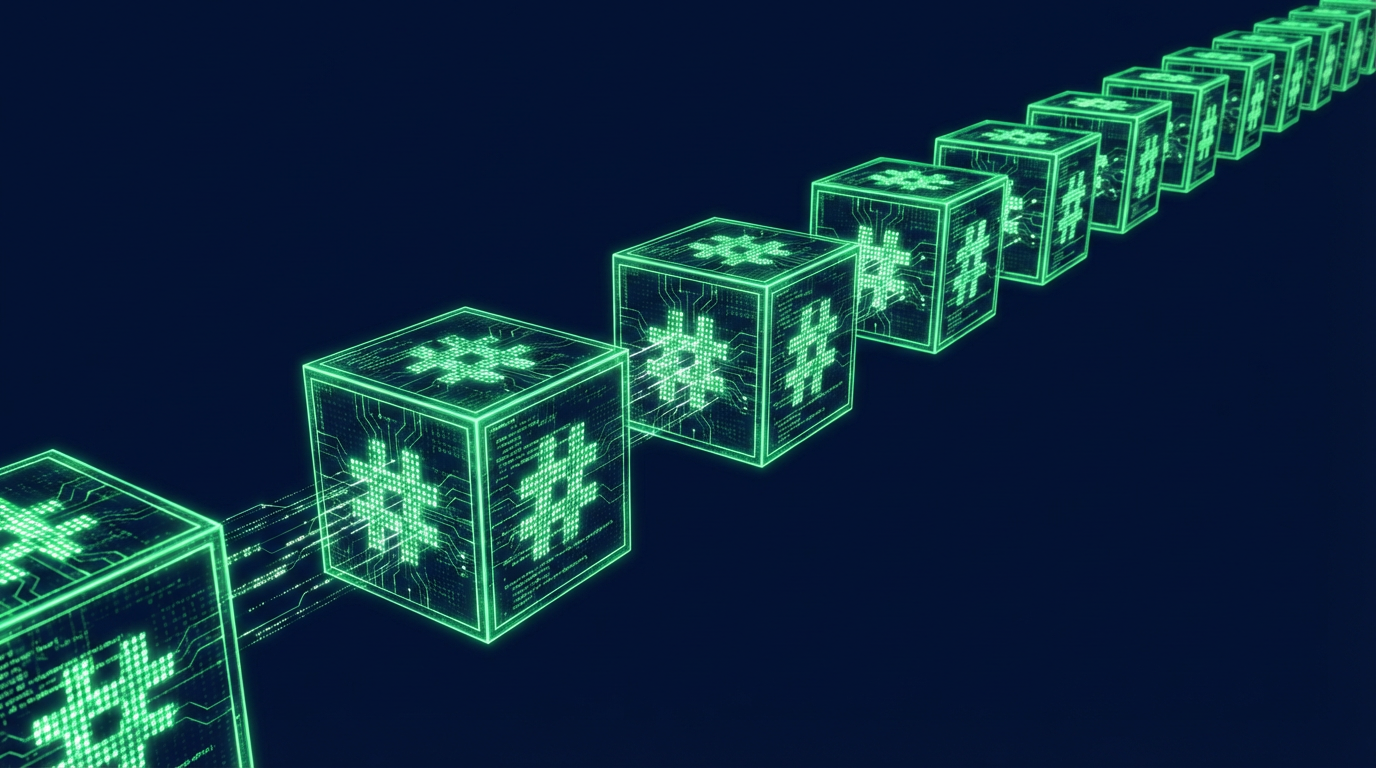
We use the #TechForGood hashtag a lot at Edge. It's not just a slogan — it captures something fundamental about why we built the network the way we did. Blockchain helps Edge Network be fair, and it keeps us accountable to the community that makes it all possible. But what does that actually mean in practice? Let's break down the why and the how.
Why: Staking
Every host on Edge Network is required to stake 5,000 $EDGE tokens before they can contribute capacity. This isn't an arbitrary barrier — it serves two critical purposes. First, the blockchain holds a public record of each contributor's commitment to the network. It's visible, verifiable, and immutable. Second, the stake protects the network against malicious actors. If someone wants to disrupt the network, they have skin in the game — and something to lose. This mechanism ensures that the people running infrastructure on Edge are genuinely invested in its success.
Why: Value Attribution
When customers use Edge Network — whether for compute, storage, CDN, or DNS — the blockchain measures that usage in real time. It tracks how much data is stored, how much bandwidth is consumed, and how much processing power is used. Then it divides rewards between the contributors who provided that capacity, proportionally and transparently.
There's no middle manager deciding who gets paid what. No opaque algorithm making decisions behind closed doors. The blockchain handles value attribution automatically, and anyone can verify the calculations. This is what fairness looks like at the protocol level.
Why: Network Governance
Staking doesn't just protect the network — it gives contributors a voice. Stakers can make suggestions for how the network should evolve, vote on proposals, and even veto decisions they disagree with. We're starting with an advisory model — gathering input from the community and incorporating it into our roadmap. But the direction of travel is clear: full decentralisation of governance, where the community has direct control over the network's future.
This isn't governance theatre. It's a structured, blockchain-backed system that ensures the people who build and maintain the network have a meaningful say in how it's run.
How: Edge's Own Blockchain
Edge runs its own independent blockchain, purpose-built for the demands of a distributed cloud network. Why not just use Ethereum or another existing chain? Because our network generates millions of micro-transactions — every data request, every storage operation, every compute task creates on-chain activity. On a public blockchain with gas fees, that would be prohibitively expensive. On Edge's own chain, those transactions are processed internally with no fees.
Customers don't need to know or care about any of this. They can pay for Edge services with traditional currency — credit card, bank transfer, whatever works. The blockchain operates under the hood, handling the mechanics of value attribution and contributor rewards without requiring customers to hold or manage tokens.
How: The Bridge
For contributors and token holders, Edge maintains a bridge between its internal blockchain and connected external networks. The $EDGE token exists as an ERC-20 on Ethereum. When contributors want to participate in the network, they convert their $EDGE ERC-20 tokens to $XE via the bridge — $XE being the internal token used within Edge's own blockchain. When they want to cash out their earnings, they convert $XE back to $EDGE ERC-20 and can trade or hold as they see fit.
This architecture gives us the best of both worlds: the speed and zero-fee transactions of a purpose-built chain for internal operations, combined with the liquidity and interoperability of the Ethereum ecosystem for external trading and staking.
The Bigger Picture
Blockchain isn't the product at Edge — it's the engine. It's the mechanism that ensures fairness, enables transparency, and gives the community genuine ownership of the network they're building. Every stake, every transaction, every vote is recorded on-chain and open to scrutiny. That's what #TechForGood looks like when you build it into the protocol itself.
Start Free — No Card Required
Create a free account in seconds. Free DNS, free CDN and Storage tiers, and per-resource compute billed hourly. Zero egress fees.
EDGE2FREE Want to learn more about running a node or the technology behind our network? Explore our network page or get in touch with our team.