How Decentralization Enhances Cloud Storage Security
Decentralized cloud storage offers a more secure alternative to traditional centralized solutions through encryption, distribution and redundancy.
 Will LebensCOO & Co-founder
4 min read
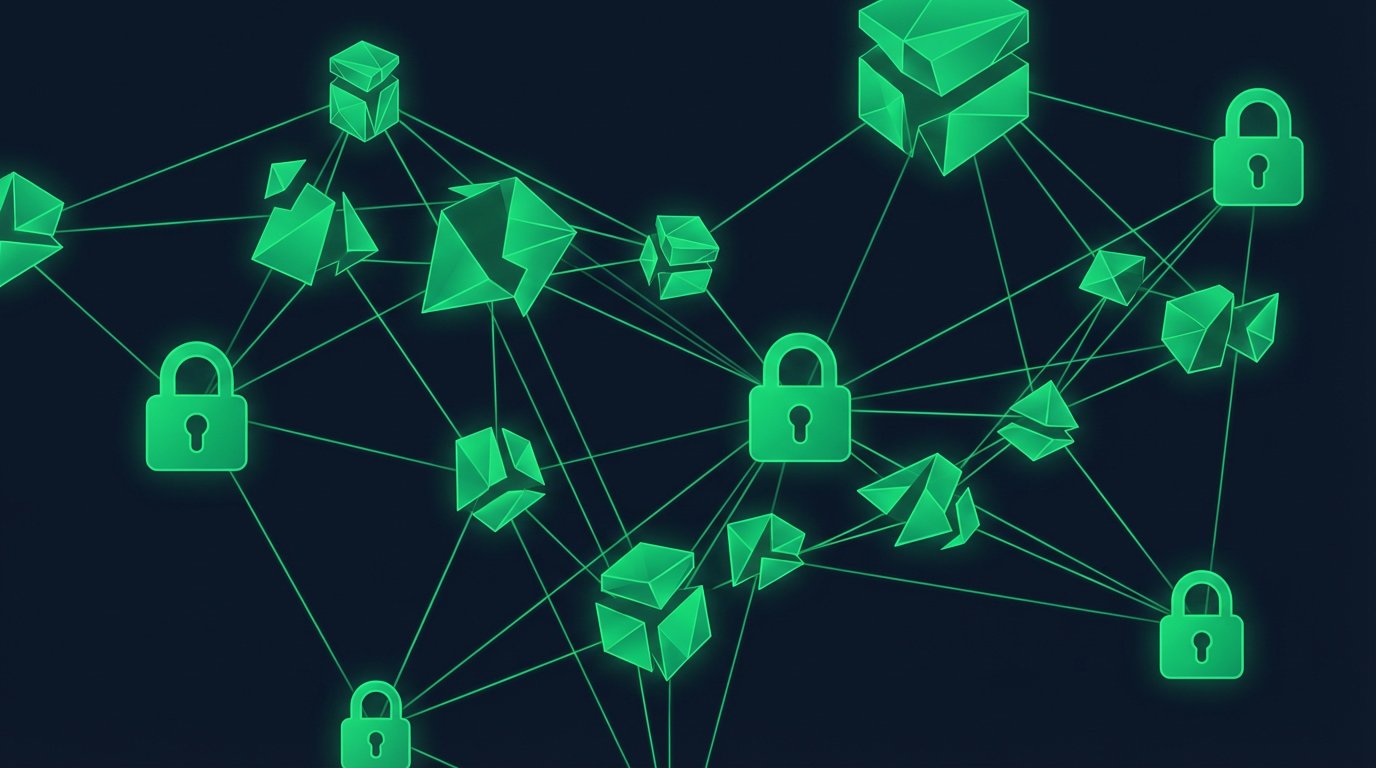
As the volume of data generated worldwide continues to grow at an extraordinary pace, the need for secure and reliable cloud storage has never been greater. Traditional centralized cloud storage — where data resides in servers controlled by a single provider — has served as the backbone of modern digital infrastructure. However, it comes with inherent vulnerabilities that decentralized alternatives are uniquely positioned to address.
Understanding Decentralized Cloud Storage#
Decentralized cloud storage distributes data across a network of independent nodes rather than housing it in a handful of data centers owned by one entity. Files are split into encrypted fragments and spread across geographically diverse locations, with no single node holding a complete copy of any file. This architecture fundamentally changes the security equation, removing the single points of failure that plague traditional systems.
Instead of trusting one provider with the entirety of your data, a decentralized model relies on cryptographic guarantees and network consensus to ensure integrity, availability, and confidentiality.
Improved Data Security#
One of the most significant advantages of decentralized storage is the use of client-side encryption. Before data ever leaves a user’s device, it is encrypted with keys that only the user controls. Unlike centralized providers that often manage encryption keys on the user’s behalf — creating a potential point of compromise — decentralized systems ensure that encryption keys remain solely with the data owner.
This means that even if an individual node in the network were breached, the attacker would gain access to nothing more than an unintelligible encrypted fragment. Without the user’s private key, reconstructing meaningful data is computationally infeasible.
Resilience to Attacks#
Centralized data centers present high-value targets for cyberattacks. A single successful breach can expose millions of records. In a decentralized network, data is dispersed across a vast number of independent nodes. An attacker would need to simultaneously compromise a majority of these nodes — each with its own security measures — to piece together a usable dataset.
This distributed architecture makes large-scale data breaches significantly more difficult to execute. The cost and complexity of mounting such an attack act as powerful deterrents, pushing the security posture of decentralized storage far beyond what centralized models can offer.
Data Redundancy and Availability#
Decentralized systems achieve high availability through redundancy. Encrypted fragments of each file are replicated across multiple nodes in the network. If one or several nodes go offline — whether due to hardware failure, maintenance, or a localized attack — the remaining nodes still hold enough fragments to reconstruct the original data seamlessly.
This stands in contrast to centralized providers, where an outage at a single data center or region can render data inaccessible for hours or even days. Decentralized redundancy ensures that data remains available around the clock, regardless of conditions at any individual node.
Transparency and Trust#
Trust in centralized storage ultimately depends on the policies and practices of one organization. Users have limited visibility into how their data is stored, handled, or protected behind the scenes. Decentralized storage introduces a new trust model built on blockchain-based verification.
Using blockchain, every storage transaction — from file upload to retrieval — can be cryptographically logged and independently verified. This transparent, tamper-proof audit trail allows users and auditors alike to confirm that data has been stored correctly and has not been altered, without relying on the word of a single provider.
Privacy Preservation#
Privacy is a growing concern in an era of increasing regulation and data-driven business models. Centralized providers may be subject to government data requests, internal misuse, or opaque data-sharing agreements. Decentralized storage mitigates these risks by design: because data is encrypted before it leaves the user’s device and fragmented across independent nodes, no single party — including the network operator — can access or read the stored information.
This architecture aligns naturally with privacy-first principles and regulatory frameworks like GDPR, giving users genuine sovereignty over their data.
Challenges and Future Prospects#
Decentralized cloud storage is not without its challenges. Coordinating a global network of independent nodes requires robust incentive mechanisms, efficient data retrieval protocols, and solutions for ensuring consistent performance across diverse hardware. Latency, network coordination, and user experience still demand continued innovation.
However, the trajectory is clear. At Edge, we are building decentralized storage solutions that leverage blockchain technology for data consistency and retrieval verification. By combining client-side encryption, distributed redundancy, and transparent on-chain auditing, we are creating a storage layer that is more secure, more resilient, and more respectful of user privacy than any centralized alternative.
The future of cloud storage is decentralized — and it is being built today.
Exclusive Offer
Start Free — No Card Required#
Create a free account in seconds. Free DNS, free CDN and Storage tiers, and per-resource compute billed hourly. Zero egress fees.
Promo code: EDGE2FREE
Want to learn more about running a node or the technology behind our network? Explore our network page or get in touch with our team.
Will LebensCOO & Co-founderRelated posts

Engineering2 min read
Hidden in Plain Sight
Edge Network stores the internet in homes and offices all around us. But that doesn't make it any less secure.
 Adam K DeanCTO
Engineering4 min read
Why Decentralization is Essential for DNS Security
A new wave of decentralisation is offering potential solutions to enhance DNS security, resilience and privacy.
Adam K DeanCTO
Engineering4 min read
The Future of Internet: Decentralized Cloud Hosting
Decentralised cloud hosting promises to dramatically shift the status quo and reshape the future of the internet.
Will LebensCOO & Co-founder
Get the Edge Digest
New posts and release notes from the Edge team, sent to your inbox. No spam, and you can unsubscribe at any time.